Willa Müller · 15 October 2026
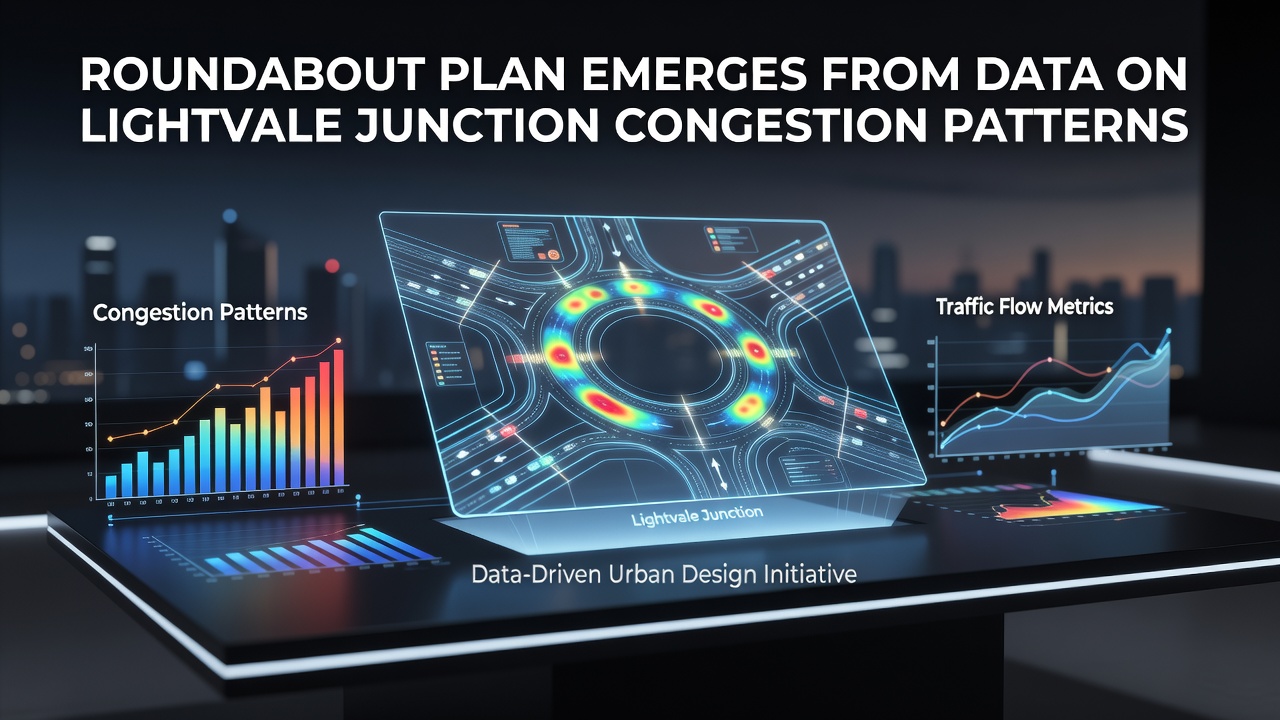
Roundabout Plan Emerges from Data on Lightvale Junction Congestion Patterns
Data gathered at Lightvale Junction over an eighteen-month period has prompted local planners to advance a roundabout design as the primary response to recurring delays and safety concerns at the intersection. Traffic counters installed in early 2025 recorded average daily volumes exceeding 24,000 vehicles, with pronounced spikes between 7:00 a.m. and 9:00 a.m. as well as 4:30 p.m. and 6:30 p.m. on weekdays. Those figures align with regional growth trends tracked by the Lightvale Planning Department since 2022.
Researchers who reviewed the sensor output noted that left-turn movements from the northbound and southbound legs accounted for the longest queues, often stretching more than 300 feet during peak intervals. Signal timing adjustments tested in mid-2025 produced only marginal improvements, reducing average delay by roughly 12 seconds per vehicle. Observers monitoring camera feeds documented 47 rear-end incidents and 19 angle collisions between January 2025 and September 2026, numbers that exceed the five-year average for comparable four-leg intersections in the county.
Traffic Volume and Delay Metrics
Continuous monitoring stations logged queue lengths at 15-second intervals, generating more than 4.2 million data points that transportation analysts later aggregated into hourly and daily summaries. Peak-hour delay averaged 48 seconds per vehicle in the morning and 52 seconds in the evening, while off-peak periods showed delays under 15 seconds. Weekend volumes remained 35 percent lower than weekday figures yet still produced measurable backups when events occurred at the nearby regional high school.
Those who've studied the intersection note that freight traffic, primarily delivery trucks serving commercial corridors east of the junction, contributed an additional 8 percent of total volume during midday hours. Classification sensors distinguished passenger cars from single-unit trucks and tractor-trailers, allowing planners to model how heavier vehicles affect gap acceptance at the existing stop-controlled approaches.
Safety and Operational Findings
Crash reports compiled by the Lightvale Police Department and cross-referenced with state transportation databases revealed that 62 percent of incidents involved failure to yield during permitted left turns. Nighttime visibility measurements taken in October 2026 indicated that overhead lighting met current standards yet did not fully mitigate glare from oncoming headlights on the east-west approaches. Pedestrian counts at adjacent crosswalks remained modest, averaging 42 crossings per hour during daylight, but the data set included several near-misses when vehicles accelerated through yellow intervals.
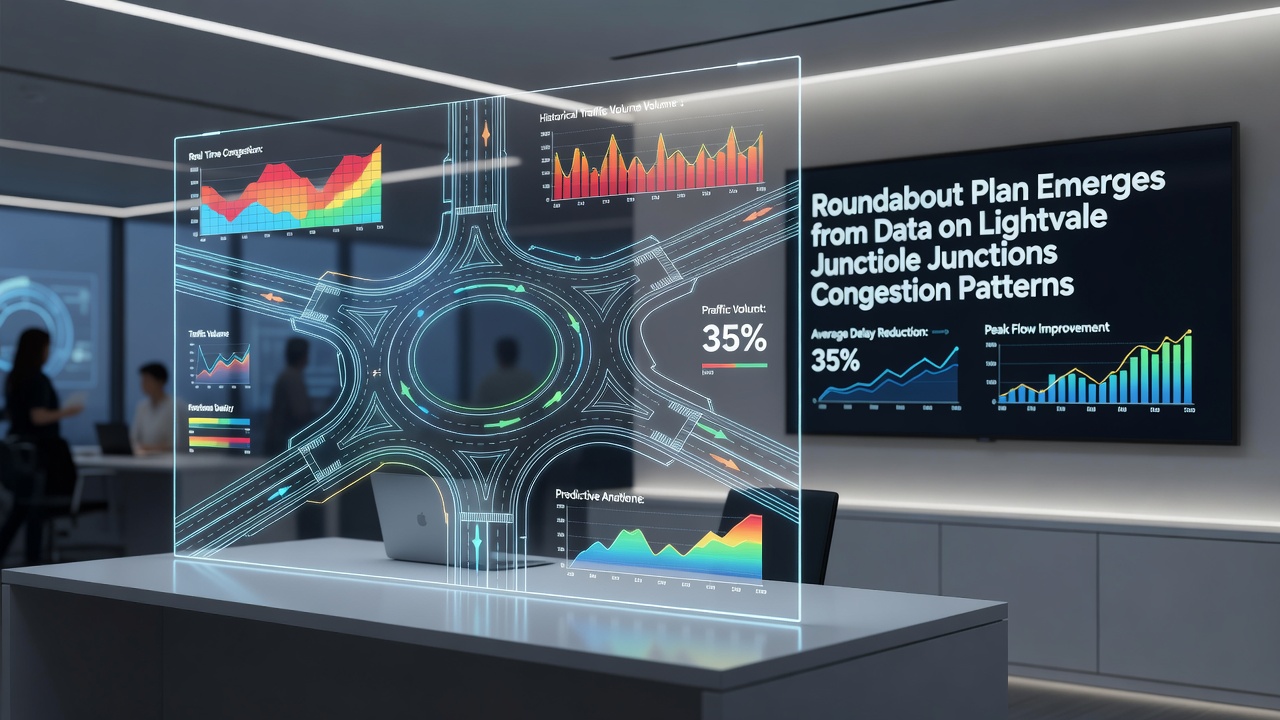
Simulation models calibrated with the field data projected that a single-lane roundabout would cut average peak delay to 18 seconds per vehicle and reduce the total number of conflict points from 32 to 8. The same models indicated that truck throughput would remain within acceptable limits provided the circulatory roadway maintained a 14-foot width and truck aprons were installed at each entry.
Proposed Design Elements
Engineering drawings released in October 2026 depict a 110-foot inscribed circle with four 16-foot entry lanes that taper to single lanes within the circulatory roadway. Splitter islands measuring 40 feet in length are planned to guide approaching traffic and provide refuge for pedestrians. Landscaping buffers around the perimeter are sized to accommodate native plantings while preserving sight lines for drivers.
Utility relocation estimates prepared by the public works department place the project cost between $2.8 million and $3.4 million, depending on final pavement thickness and drainage requirements. Funding discussions have referenced allocations from the county transportation improvement program and potential state safety grants tied to crash-reduction performance measures.
Public information sessions scheduled for November 2026 will present the simulation outputs alongside before-and-after volume diagrams. Residents and business owners along the adjacent commercial strip have been invited to review access management changes that would convert two existing driveways to right-in, right-out operation once the roundabout is constructed.
Implementation Timeline and Next Steps
Survey crews completed topographic mapping in late September 2026, clearing the way for detailed design work expected to conclude by March 2027. Environmental review documents are under preparation to evaluate stormwater impacts and potential effects on nearby wetlands identified in the county geographic information system. Construction, if authorized, would likely begin in spring 2028 following completion of utility coordination and right-of-way acquisition for minor corner rounding at two parcels.
Additional traffic counts scheduled for spring 2027 will verify whether volumes have continued the 3 percent annual growth rate observed since 2023. Those updated figures will feed final capacity checks before the design is sealed for bidding.
Conclusion
The roundabout proposal now under consideration rests directly on the congestion and safety data compiled at Lightvale Junction. Continued monitoring through the winter months will supply any remaining inputs required for environmental clearance and final cost refinement. Once the design advances to construction documents, the project will move into the public bidding phase, with updates posted on the municipal planning portal as milestones are reached.