Sage Jenkins · 1 October 2026
Lightvale Families Participate in Annual Heritage Cooking Contest Celebrating Diverse Traditions
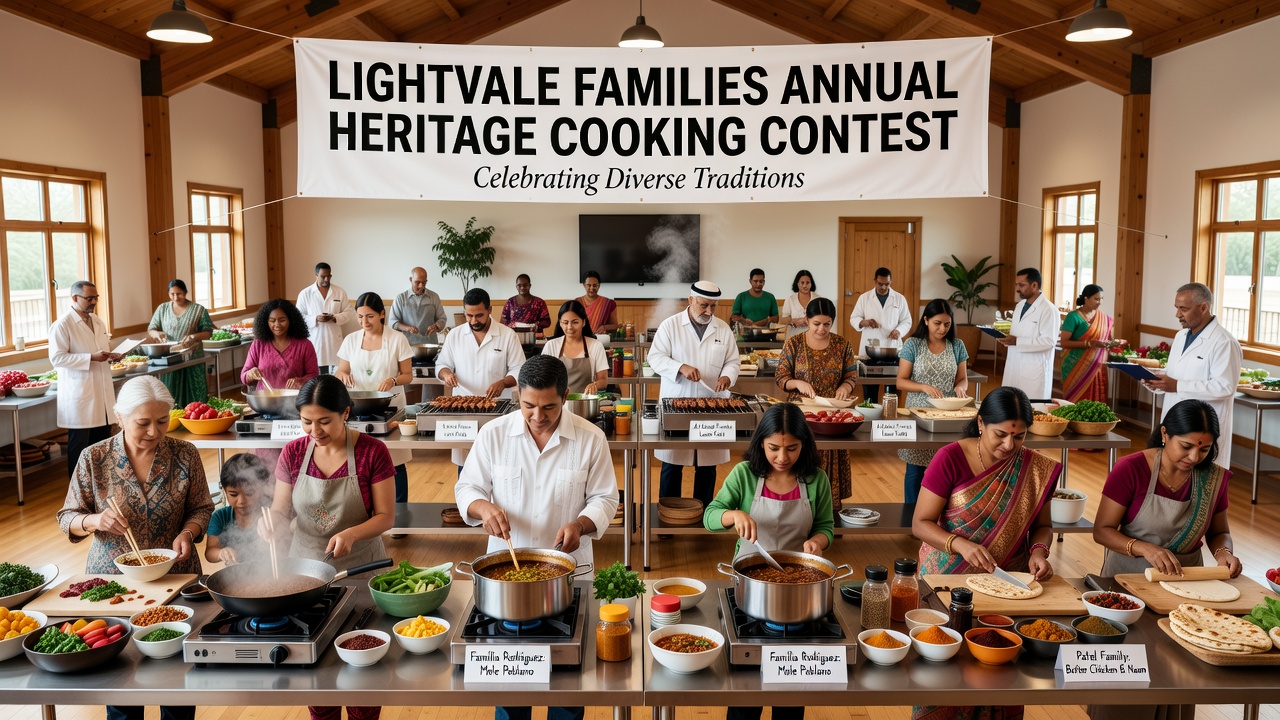
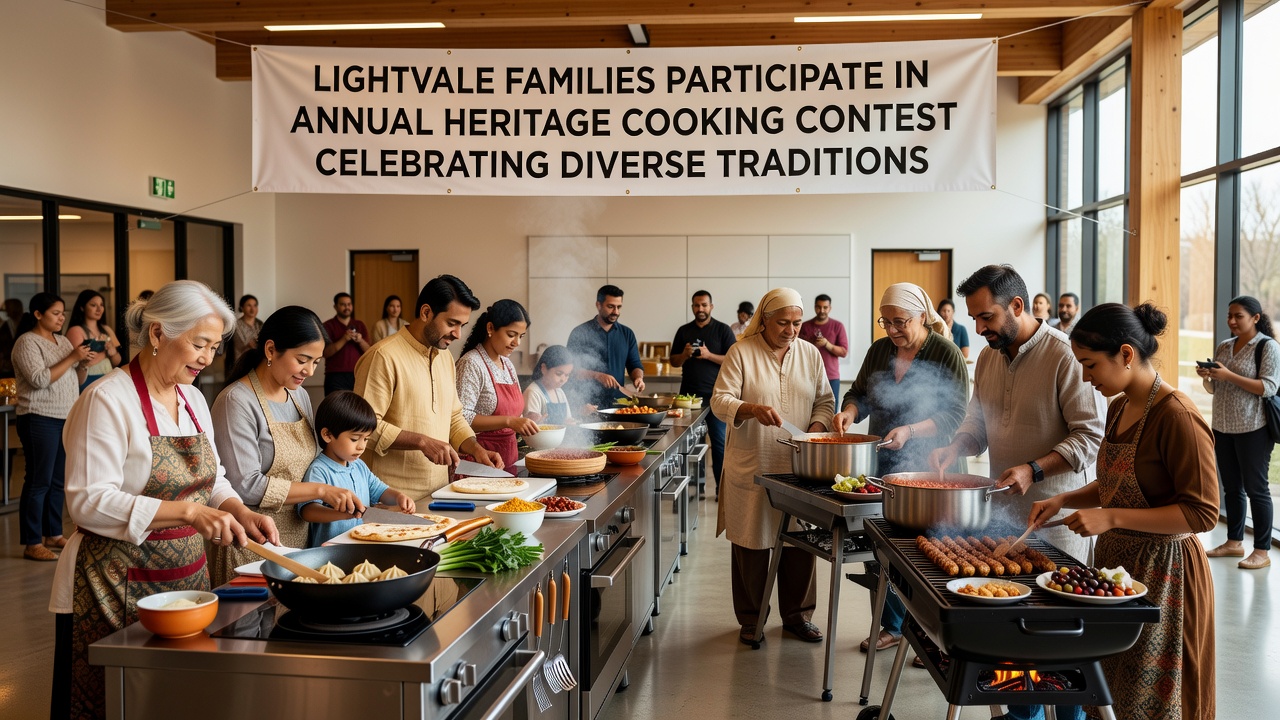
Lightvale residents gathered once again for the annual Heritage Cooking Contest that highlights family recipes passed down through generations and reflects the town's growing mix of cultural backgrounds, and the event took place over a weekend in October 2026 with dozens of households setting up stations along the community center grounds. Organizers recorded participation from more than forty families representing at least fifteen distinct heritage lines, each preparing dishes that originated in their ancestral regions while adapting ingredients available locally.
Event Structure and Participation Details
Contest rules require each team to present one main dish along with a side or dessert that ties directly to documented family history, and judges evaluate entries on authenticity of technique, flavor balance, and the accompanying story that explains how the recipe traveled to Lightvale. Registration opened in late summer with a requirement that participants submit written lineage notes verified through family records or oral histories collected by the local historical society, which allowed the panel to confirm that entries truly represented living traditions rather than modern inventions. Attendance figures released by town officials showed roughly 1,200 visitors across the two days, a number that aligns with steady growth tracked since the contest began eight years earlier.
Featured Family Entries and Traditions
One group tracing roots to the Philippines prepared adobo using a method that incorporates coconut milk in place of the more common vinegar-heavy version, a variation documented in their great-grandparents' letters from the 1920s, while another household with Italian ancestry demonstrated hand-rolled pasta paired with a tomato sauce simmered from seeds brought over in the 1950s. Families with Mexican heritage presented mole poblano prepared over several hours, and a team from the local Hmong community cooked a pork and vegetable stir-fry seasoned with herbs grown in backyard plots that mirror practices common in Laos. Observers noted that several entries combined elements from multiple backgrounds because intermarriage has become common in Lightvale over recent decades, producing hybrid dishes that still follow core preparation steps preserved within each lineage.
The judging panel included a retired chef who once worked in regional restaurants, a nutritionist affiliated with the county health department, and a cultural anthropologist from a nearby university who specializes in foodways documentation. Scores combined sensory evaluation with narrative accuracy, and the top prize went to a family whose Salvadoran pupusas incorporated masa made from locally milled corn while preserving the traditional filling of beans and cheese. Second and third place recognized entries from Vietnamese and Polish households respectively, each awarded cash prizes funded through community donations and small business sponsorships.
Community Impact and Historical Context
Records maintained by the Lightvale Public Library indicate that the contest started in 2018 as a small gathering of five families and expanded each year as word spread through neighborhood networks and school newsletters. Data collected by the chamber of commerce shows increased foot traffic at nearby stores during the event weekend, with sales reports indicating higher demand for specialty spices and produce that participants source from regional suppliers. Town planning documents reference the contest as one factor contributing to the development of a permanent outdoor kitchen space at the community center, a project completed in 2024 that now supports year-round cultural programming.
Similar heritage food events occur across North America, according to reports from the Library of Congress on community-based cultural documentation projects, and Canadian heritage agencies have tracked parallel increases in family-led cooking festivals that preserve immigrant recipes. One study published by researchers at the University of British Columbia examined how such contests strengthen intergenerational knowledge transfer, finding measurable improvements in younger participants' ability to replicate traditional techniques after repeated involvement.
Logistics and Future Planning
Volunteers from the Lightvale Rotary Club handled setup and cleanup, while the parks department supplied tables, tents, and waste stations that kept the site organized throughout the weekend. Health department inspectors conducted routine checks on refrigeration units and hand-washing stations to meet standard food safety codes, resulting in zero violations reported in the final summary. Organizers have already begun collecting feedback forms from participants and visitors to guide adjustments for the 2027 edition, including potential additions such as live demonstrations of preservation methods like pickling and drying that extend beyond the main contest format.
Conclusion
The 2026 Heritage Cooking Contest concluded with a public tasting session that allowed attendees to sample reduced portions of every entry, and remaining ingredients were donated to the local food pantry as part of an established partnership. Attendance records and participation numbers suggest continued interest in the format, with preliminary sign-ups for next year already exceeding the previous cycle's totals. Town archives now hold recipe binders and video recordings from each annual event, creating a growing repository that documents how Lightvale's diverse population maintains connections to its varied origins through shared meals prepared according to longstanding family practices.