Petra Ludwig · 3 September 2026
How Rising Student Numbers at the Regional High School Are Reshaping Town Planning Priorities
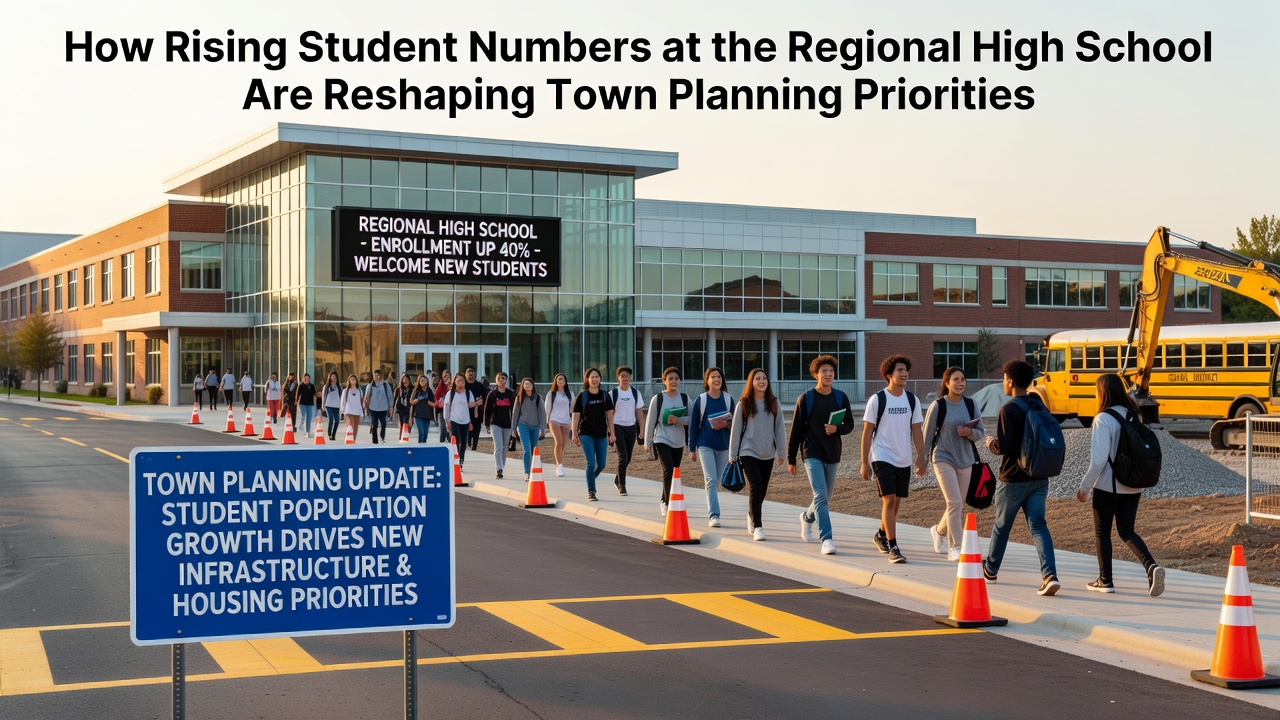
Enrollment at the regional high school has climbed steadily over the past five years, and town planners in Lightvale now face direct pressure to adjust zoning maps, transportation corridors, and public facility budgets accordingly. Data from the local education authority shows an increase of 312 students between 2021 and 2025, with projections indicating another 180 students could arrive by the opening of the 2026-2027 school year in September 2026.
Enrollment Growth and Its Measurable Effects
School district records indicate the regional high school now serves 1,847 students, up from 1,535 in the 2020-2021 academic year, and this growth coincides with broader population shifts documented by the U.S. Census Bureau. Observers note that families have moved into newly built subdivisions along the eastern edge of town, where housing permits issued between 2022 and 2025 totaled 214 single-family units and 87 multifamily units. Those who've studied local migration patterns point out that many of these households include children aged 14 to 18, the precise demographic driving high school enrollment figures.
Traffic counts collected by the public works department reveal a 27 percent rise in vehicle volume on routes leading to the school campus during morning and afternoon peak hours, and planners have responded by scheduling intersection signal upgrades at three locations. The reality is that parking shortages on campus have already prompted the school board to lease an adjacent lot, while the town council has allocated funds for sidewalk extensions along two connecting streets to encourage walking and reduce vehicle trips.
Infrastructure Adjustments Underway
Planning staff presented updated land-use scenarios to the council in late 2025 that rezone 48 acres of previously agricultural land for medium-density residential use, a change designed to accommodate additional households while concentrating growth near existing utility lines. Engineers have modeled the impact of these new units on water and sewer capacity, and the resulting report shows the current treatment plant holds sufficient headroom through 2030 provided no further acceleration occurs beyond current trends.
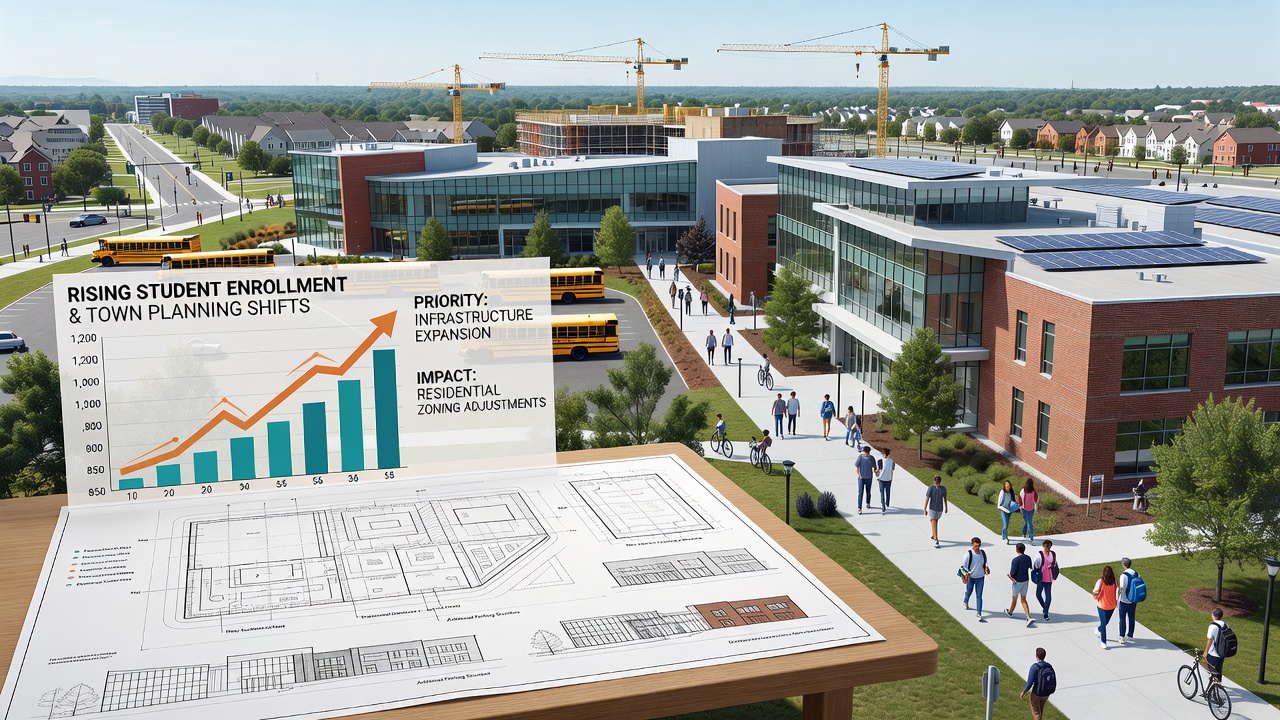
Bus route revisions took effect at the start of the current school year, adding two new stops and extending service by 12 minutes on the longest route to cover the newest subdivision. According to figures released by the National Center for Education Statistics, similar enrollment surges in other mid-sized districts have produced comparable transportation adjustments, and Lightvale follows that established pattern.
Budget and Zoning Responses
The town budget for fiscal year 2026 includes a dedicated line item of $1.2 million for school-adjacent infrastructure, covering the signal work, sidewalk projects, and preliminary engineering for a potential roundabout at the main campus entrance. Planners have also begun reviewing overlay district regulations that would require new residential developments within a one-mile radius of the school to include pedestrian pathways and contribute to a shared transportation fund. Research from the Lincoln Institute of Land Policy indicates such targeted zoning tools can channel growth in ways that limit sprawl while supporting educational facilities, and Lightvale officials have referenced those findings in recent public documents.
Meetings between school administrators and municipal staff occur monthly to share enrollment forecasts, and the next session scheduled for October 2026 will incorporate the first official count from the September opening. Those who've tracked these coordination efforts report that early data sharing has already prevented at least one mismatch between projected housing units and available classroom seats.
Conclusion
Lightvale continues to integrate school enrollment data directly into its comprehensive planning process, with zoning decisions, transportation investments, and utility upgrades now evaluated against the latest student projections. The adjustments underway reflect a sustained response to documented demographic change rather than isolated projects, and further refinements will follow the September 2026 enrollment figures as they become available.